Transform your B2B content operations from chaos to clarity with intelligent automation that delivers measurable results.
Why Content Workflow Automation is a Game-Changer for B2B Teams
The Productivity Crisis
Manual content processes are draining your team’s potential. Account managers waste up to
20 hours per week on repetitive tasks that could be automated, according to recent Sight AI research.
That’s half a work week lost to inefficiency.
The solution is clear: automation reduces production time by 35–80%, dramatically boosting both output and quality. This isn’t just about working faster it’s about fundamentally transforming how your team plans, creates, distributes, and optimizes content at scale with consistency and precision.
In this guide, you’ll discover how to demystify automation technology, implement practical workflows that deliver measurable results quickly, align teams around smarter processes, and calculate the ROI needed to confidently convince leadership to invest in sustainable transformation.
20
Hours Wasted Weekly
On average, each account manager spends nearly half a work week on repetitive manual processes — content edits, approvals, formatting, status updates, and internal coordination. Time that should drive revenue is consumed by operational friction.
35–80%
Time Reduction
Intelligent automation eliminates repetitive workflows, standardizes execution, and accelerates approvals. Teams reclaim hours every week, shifting their focus from coordination to strategy and performance.
3–4x
Typical ROI
Organizations typically see a 3–4x return within the first year of implementation. Reduced labor cost, faster execution cycles, improved output consistency, and measurable performance gains compound into scalable operational efficiency.
Understanding Content Workflow Automation in 2026
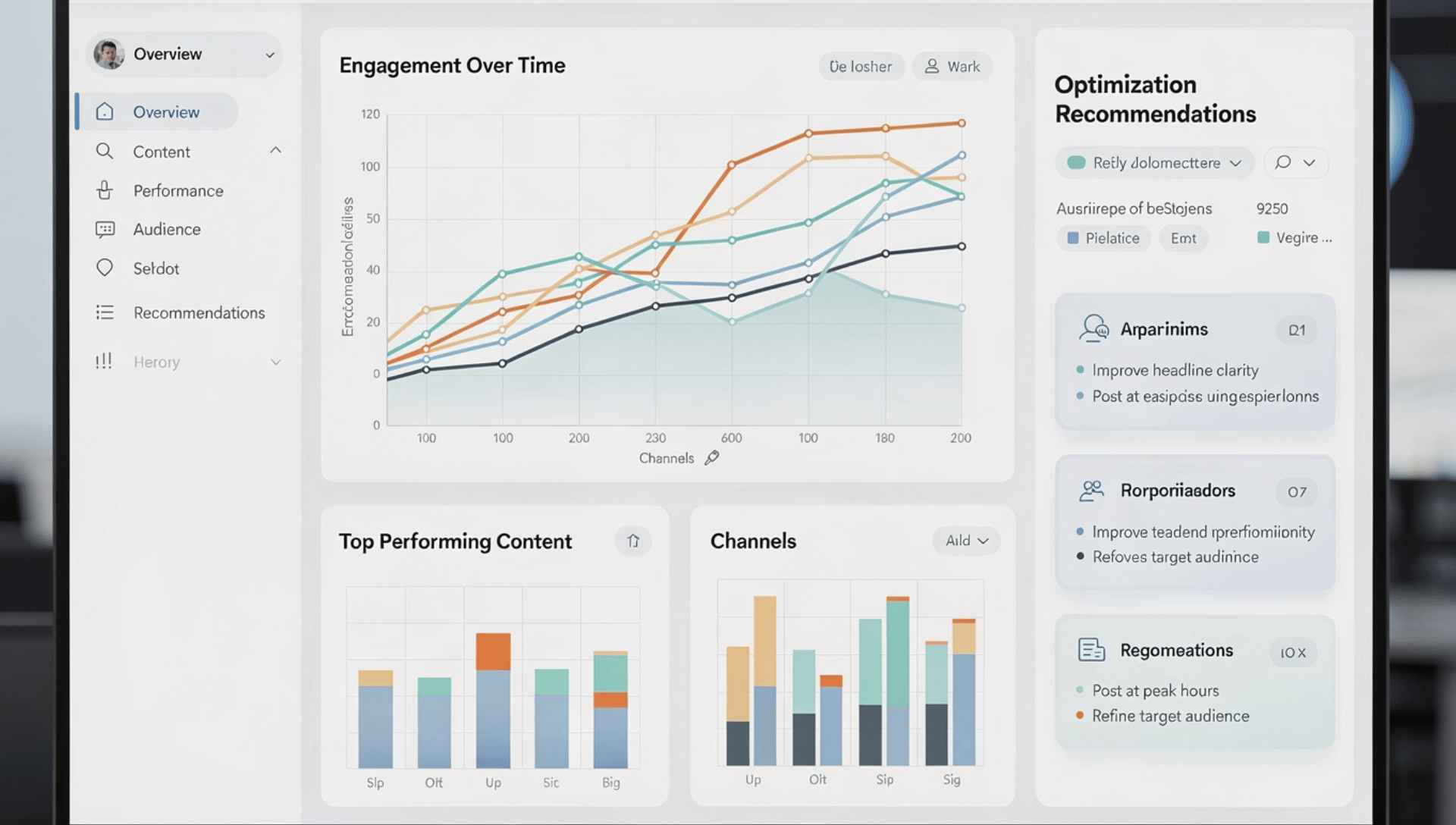
Content workflow automation represents the orchestration of tools and processes from ideation through publishing eliminating manual handoffs and reducing friction at every stage. Unlike general marketing automation that focuses on lead nurturing and email campaigns, content marketing automation specifically targets the creation, approval, and distribution of content assets.
Traditional Approach
Manual handoffs between writers, editors, and designers create operational delays, fragmented communication, and constant version-control issues. Progress depends on follow-ups, approvals stall in inboxes, and productivity suffers.
Automated Workflow
Integrated systems move content seamlessly through each stage with automatic notifications, centralized tracking, and structured approvals. Execution becomes predictable, measurable, and significantly faster.
AI-Powered Future
Human–AI collaboration becomes the standard operating model. Intelligent systems handle repetitive coordination and execution tasks, enabling teams to focus on strategic thinking, creativity, and revenue-driving initiatives.
The landscape has shifted dramatically. AI-powered workflows and human-AI collaboration have emerged as the new standard in 2026, according to Digital Applied research. Organizations that embrace this evolution gain significant competitive advantages in speed, consistency, and scale.
Mapping Your Current Content Process to Identify Automation Opportunities
Before automating anything, you need a clear picture of your current state. Start by shadowing actual content pieces from brief to publication, tracking time spent on each task. This audit reveals where hours disappear and where automation delivers maximum impact.
Common Bottlenecks That Kill Productivity
Brief Creation
Writers spend hours clarifying requirements that should be standardized.
Approval Delays
Content sits in queues for days waiting for stakeholder reviews.
Manual Status Updates
Project managers chase team members for progress reports.
File Transfers
Moving content between tools creates version control nightmares.
Prioritization Matrix
Plot tasks on two axes: time consumption versus automation difficulty. High-time, low-difficulty tasks are your quick wins. High-time, high-difficulty projects require strategic planning but deliver transformative results.
Quick Win Example: Automating social media scheduling might save 5 hours weekly with minimal setup effort.
Strategic Project: Implementing AI-powered content generation requires investment but can reduce production time by 60%.
Build a Scalable Content Automation System
Automation isn’t about adding more tools. It’s about designing a connected workflow that turns content into measurable revenue impact.
Building the Automated Content Workflow: Step-by-Step
Creating an effective automated workflow requires methodical implementation across five critical stages. Each step builds on the previous one, creating a seamless pipeline from concept to publication.

This integrated approach transforms content operations from a series of manual handoffs into a smooth, efficient system.
Capture Briefs Efficiently
Use structured templates in Notion, Airtable, or Google Docs to standardize requirements, reduce ambiguity, and eliminate unnecessary back-and-forth clarifications.
Automate Content Generation
Deploy intelligent drafting tools to generate structured first versions from your templates, significantly reducing writing time while maintaining consistency.
Implement Quality Control
Integrate automated grammar checks and brand voice validation before human review, ensuring higher consistency and faster approval cycles.
Automate Publishing
Connect directly to CMS platforms and scheduling systems to publish content automatically, removing repetitive manual uploads.
Track Performance
Use automated analytics integrations to collect engagement data and feed performance insights back into your content planning loop.
Integrating AI to Supercharge Planning and Ideation
Artificial intelligence transforms the earliest stages of content creation, where strategic decisions have the greatest impact. AI-powered tools now handle topic discovery, keyword research, and editorial calendar population—tasks that previously consumed days of strategic planning time.
According to AirOps 2026 research, organizations using AI for content planning reduce revision cycles significantly by embedding brand knowledge and SEO requirements early in the process. The AI learns your brand voice, target keywords, and content formats, then generates briefs that align with strategic goals from the start.
The result? Writers receive clear, comprehensive briefs that require minimal clarification. Editors spend less time requesting revisions because the content starts closer to the target.
Human Editors’ Critical Role
While automation handles research, data synthesis, and structural drafting, human editors provide irreplaceable value: maintaining an authentic, differentiated voice; selecting the most strategic angles; refining nuance and clarity; applying industry context; and ensuring every piece of content aligns tightly with positioning, brand standards, and broader business objectives.
Topic Discovery
AI analyzes trends, competitor content, and search data to identify high-value content opportunities.
Keyword Research
Automated tools identify semantic clusters and search intent for comprehensive SEO coverage.
Editorial Planning
AI populates content calendars with balanced topic mixes aligned to business priorities.
Overcoming Common Challenges and Pitfalls
Even well-designed automation systems face predictable obstacles. Understanding these challenges before implementation helps you build resilient workflows that deliver consistent results.
The Prompt Bottleneck
Many teams hit a wall when AI outputs become inconsistent. The solution isn’t better prompts—it’s structured, repeatable AI workflows with standardized inputs and validation steps, as NAV43 research demonstrates. Build prompt libraries and templates rather than crafting custom instructions for each piece.
Approval Gridlock
Traditional approval processes create days of delay. Implement multi-tier gates with clear decision authority at each level. Research shows this approach reduces cycle times from days to hours. Junior reviewers check brand compliance, senior leaders approve strategy only.
Brand Consistency Risks
AI can drift from your brand voice or generate factual errors. Establish governance frameworks with automated brand voice scoring and fact-checking protocols to maintain output quality and speed.
Pro Tip: Start with narrow AI use cases and expand gradually. Teams that automate everything at once often struggle with quality control and team adoption. Build confidence through small wins before scaling.
Choosing the Right Automation Platforms for Your Team Size and Needs
Platform selection determines whether automation empowers your team or creates new headaches. The right choice depends on team size, content volume, technical capability, and integration requirements.
Platform Comparison
Zapier offers the easiest setup, minimal learning curve, and the largest app ecosystem, making it ideal for fast deployment but that convenience comes at premium pricing as usage scales. Make.com provides advanced visual workflow building with deeper logic, branching, and automation flexibility at a more mid-tier cost structure. n8n delivers powerful customization, API-level control, and strong scalability for technical teams willing to self-host and manage infrastructure. Activepieces is open-source and free to use, offering maximum control and extensibility, but it requires dedicated development resources and ongoing maintenance to operate effectively.
Recommendations by Team Size
For teams of 1–5 people, starting with Zapier keeps things simple and easy to manage without technical overhead. As teams grow to 5–20 people, Make.com typically offers the best balance of flexibility and cost efficiency. Once you scale beyond 20 people, it becomes practical to explore n8n or more robust enterprise-grade solutions for deeper customization and control. For highly technical teams that want maximum flexibility, self-hosting capabilities, and granular workflow control, Activepieces is often the most suitable choice.
Integration capabilities matter more than features lists. Your platform must seamlessly connect AI writing tools, SEO platforms, CMS systems, and analytics dashboards. Digital Applied research emphasizes that unified workflows deliver exponentially more value than isolated automation.
Real-World ROI and Impact of Content Workflow Automation
The business case for automation rests on concrete, measurable outcomes. Organizations implementing content workflow automation consistently report transformative results across time savings, cost reduction, and strategic capacity.
SaaS Company Case Study
A mid-sized B2B SaaS company reduced approval cycles from 12 days to 18 hours by implementing automated routing and multi-tier approval gates. This acceleration saved an estimated $84,000 annually in opportunity costs and freed content teams to produce 40% more assets.
Typical First-Year ROI
Digital Applied research shows organizations achieve 3–4x ROI in year one through combined time savings, error reduction, and faster publishing cycles. The investment pays for itself within 3–4 months, with compounding benefits as teams optimize workflows.
Beyond Cost Savings: Strategic Impact
The most significant benefit isn’t efficiency—it’s strategic capacity. When automation handles routine production tasks, teams redirect energy toward high-value activities: audience research, strategic positioning, and creative storytelling that differentiates brands. This shift from execution to strategy drives better business outcomes across lead generation, brand awareness, and customer engagement.
Scaling Your Automated Workflow Across Content Types and Channels
Once core workflows function smoothly, the next frontier is expansion applying automation across diverse content formats and distribution channels. This scaling phase unlocks the full potential of your investment.
Best Content Types for Automation

Sight AI research demonstrates that organizations can successfully evolve from managing a single content format to operating sophisticated multi-channel, multi-brand ecosystems by building reusable, standardized workflow templates. A well-structured blog post workflow can be adapted into case studies, whitepapers, newsletters, or landing pages with minimal friction. Similarly, social media automation frameworks can be replicated and customized across multiple platforms and brand portfolios without rebuilding systems from scratch.
The real advantage lies in iterative refinement. Teams must consistently monitor KPIs across content types and distribution channels, identify operational bottlenecks or quality gaps, and optimize workflows through structured feedback loops. Over time, this disciplined approach compounds efficiency gains, improves output quality, and creates a scalable content infrastructure that supports sustained growth rather than one-off productivity spikes.
Phase 1: Single Format
Master blog automation through one structured workflow. Eliminate manual friction, standardize briefs, and validate quality before expanding complexity.
Phase 2: Multi-Format
Expand to newsletters and social content while maintaining structural consistency and execution efficiency across formats.
Phase 3: Multi-Channel
Distribute across platforms simultaneously using integrated publishing systems and centralized tracking.
Phase 4: Multi-Brand
Scale workflows across multiple brands while preserving differentiation, voice, and strategic positioning.
The Future of Content Workflow Automation: Trends to Watch
Content workflow automation continues evolving rapidly. Understanding emerging trends helps you build systems that remain relevant and competitive as the landscape shifts.
Increasing AI Sophistication
Copy.ai research indicates AI models are becoming exponentially more capable at understanding context, maintaining brand voice, and generating nuanced content. Deeper integration with go-to-market platforms means AI will soon orchestrate entire campaigns, not just individual assets.
AI Search Visibility
AirOps highlights the growing importance of optimizing for AI search engines and answer engines. Content refresh automation will become critical as search algorithms increasingly favor recently updated, comprehensive content that directly answers queries.
Governance and Compliance
Enterprise organizations are demanding sophisticated governance frameworks. Emerging automation tools will handle compliance verification, rights management, and regulatory requirements automatically essential for scaling content operations in regulated industries.
Strategic Insight: The organizations that win in 2026 and beyond won't just automate current processes—they'll reimagine content operations around AI-human collaboration models that didn't exist two years ago.
Take Control of Your Content Operations with Automation
Content workflow automation represents more than efficiency gains—it’s a fundamental transformation in how B2B organizations create, distribute, and optimize content at scale.
Speed
Reduce production cycles by 35–80% and publish content when your audience needs it.
Quality
Eliminate errors through automated quality control while maintaining brand consistency.
Cost Savings
Achieve 3–4x ROI in year one through time savings and increased output.
Strategic Focus
Free your team from routine tasks to focus on high-value strategy and creativity.
Your Next Steps
Audit Your Workflow
Map current processes and identify bottlenecks consuming the most time.
Pilot AI Tools
Start small with one content type and prove ROI before scaling.
Scale Systematically
Expand successful workflows across content types, channels, and teams.
The Competitive Imperative
Mastering content workflow automation isn’t optional for competitive B2B content marketing in 2026 and beyond. Organizations that embrace intelligent automation will consistently outpace competitors in content velocity, production quality, operational efficiency, and measurable strategic impact across channels.
The question isn’t whether to automate—it’s how quickly and strategically you can transform your content operations, upskill your teams, and build scalable systems that keep you ahead of shifting market demands.
"Content workflow automation transforms content from a creative burden into a scalable growth system. When execution is systemized and intelligence drives flow, teams gain speed, consistency, and measurable revenue impact...."
Turn Content Into a Revenue Asset
Let’s design workflows that increase velocity, consistency, and measurable impact.